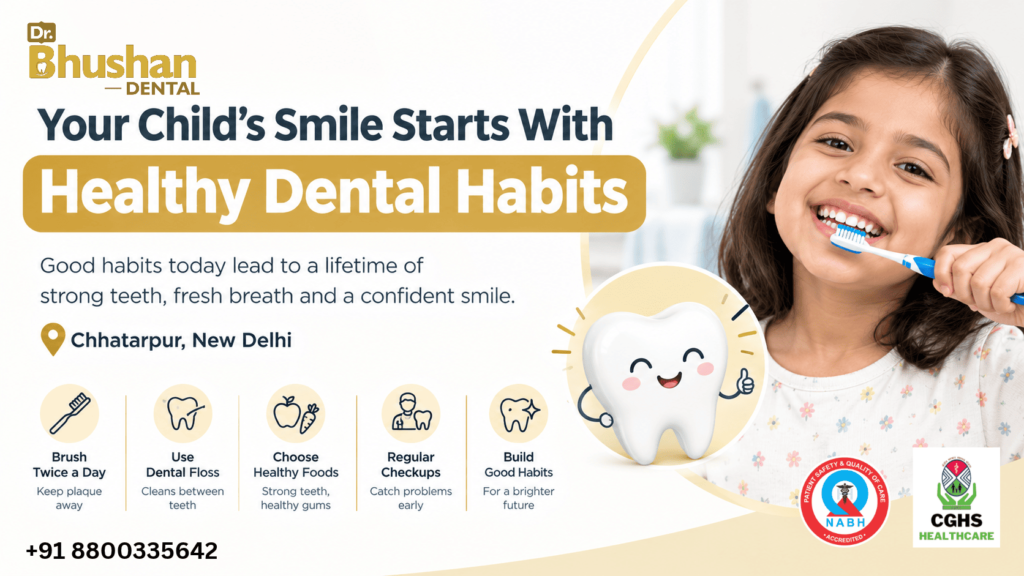
A child’s healthy smile begins with small daily habits. Brushing twice a day, choosing tooth-friendly foods, drinking enough water, and visiting a dentist regularly can help protect developing teeth and gums. However, many parents are unsure about the right brushing routine, how often children can eat sweets, or when their child should have their first dental check-up.
Baby teeth are important even though they eventually fall out. They help children chew food, develop speech, and maintain space for permanent teeth. Neglecting them can lead to tooth decay, discomfort, and difficulties with eating or sleeping.
If you are looking for a dentist in Chattarpur Delhi, understanding the basics of children’s dental care can help you make informed decisions about your child’s oral health.
At Dr. Bhushan Dental, we believe that preventive dental care and proper oral hygiene guidance are important parts of maintaining a healthy smile. With regular check-ups and the right habits at home, parents can help children build a positive relationship with dental care from an early age.
Children’s teeth are still developing, and their daily habits can influence their oral health as they grow. Although baby teeth are temporary, they play several important roles.
Healthy dental habits can help:
Parents do not need to create a complicated routine. Consistent brushing, sensible food choices, and regular dental visits are practical steps that can make a meaningful difference.
One of the most common questions parents ask is how frequently children should brush their teeth.
Children should brush twice a day for two minutes each time—once in the morning and once before bedtime. Bedtime brushing is especially important because it removes food particles and plaque that accumulate throughout the day.
Plaque is a sticky layer of bacteria that forms on teeth. When bacteria use sugars from food and drinks, they produce acids that can damage tooth enamel and cause cavities.
Use a soft-bristled toothbrush with a small head that fits comfortably inside your child’s mouth. Replace it when the bristles become worn or approximately every three to four months, or sooner if needed.
Choose fluoride toothpaste appropriate for your child’s age.
Encourage your child to spit out the toothpaste rather than swallow it.
Yes. Young children often lack the coordination needed to clean every tooth properly.
Parents should brush their child’s teeth or supervise and assist them until they can brush effectively on their own. This commonly continues until around seven or eight years of age, depending on the child’s abilities.
A simple routine can help:
Make brushing enjoyable by using a favourite song, a two-minute timer, or a colourful toothbrush. Praise your child for participating rather than focusing only on mistakes.
Understanding how to prevent cavities in children is essential for protecting both baby teeth and permanent teeth.
A cavity develops when acids produced by bacteria gradually damage the hard outer surface of a tooth. Frequent exposure to sugars increases the risk, especially when brushing is inconsistent.
The good news is that several everyday habits can reduce this risk.
Children often enjoy chocolates, biscuits, sweets, packaged juices, and other sugary snacks. These foods do not need to become a source of conflict, but how frequently children consume them matters.
Repeated snacking exposes teeth to acids throughout the day.
Parents can help by:
Whole fruit is generally a better everyday choice than fruit juice. Water and plain milk are preferable to sugary beverages for routine hydration, with individual dietary needs taken into account.
A balanced diet supports children’s overall growth and oral health.
Include a variety of foods such as:
Avoid allowing children to sip sweetened drinks for long periods. Frequent exposure to sugar can increase the risk of tooth decay even when a child brushes regularly.
Children may feel tired or resist brushing before bed. However, skipping this routine regularly can allow plaque and food debris to remain on their teeth overnight.
Try making brushing part of a predictable sequence: dinner, washing up, brushing, bedtime story, and sleep.
If your child is reluctant, let them choose their toothbrush or toothpaste flavour, provided it is suitable for their age. You can also brush your own teeth alongside them to demonstrate the habit.
A dentist can assess your child’s cavity risk and recommend appropriate preventive measures.
Depending on the child’s age, teeth, and individual needs, these may include:
Not every child needs the same treatment. A dental examination helps determine which preventive measures are appropriate.
Parents sometimes assume that a cavity will always cause pain. However, early tooth decay may not cause noticeable symptoms.
Knowing what to look for can help parents arrange a dental assessment before the problem progresses.
Common warning signs include:
These signs do not always confirm tooth decay, and some problems may not be visible to parents. A dentist can examine the teeth and determine the cause.
Do not wait for severe pain before arranging a dental visit. Early assessment can help identify the problem and clarify which treatment, if any, is needed.
If your child has facial swelling, fever with dental symptoms, or difficulty swallowing or breathing, seek urgent medical or dental care. Difficulty breathing or swallowing requires emergency assessment.
Parents often wait until all their child’s baby teeth have appeared or until a tooth starts hurting. However, the first dental visit should happen earlier.
Children should generally visit a dentist when their first tooth appears or by their first birthday, whichever comes first.
An early visit allows the dentist to check developing teeth and gums, discuss feeding and brushing habits, and help parents understand how to prevent early childhood tooth decay.
Many children benefit from dental check-ups approximately every six months. However, the ideal interval depends on the child’s oral health, cavity risk, and the dentist’s recommendations.
A child with a history of cavities or other risk factors may need more frequent monitoring.
During a routine visit, the dentist may:
Regular check-ups also help children become familiar with the dental environment before an urgent problem arises.
Some children feel nervous about dental visits because they do not know what to expect. Others may become anxious after experiencing discomfort or hearing frightening stories.
Parents can help make the experience more positive.
Explain that the dentist checks their teeth and helps keep their smile healthy. Use simple, reassuring language without promising that every visit will be completely painless.
Avoid using words such as “needle,” “drill,” or “pain” to frighten a child or influence their behaviour. Let the dental team explain any procedure in an age-appropriate way.
Praise your child for sitting in the dental chair, opening their mouth, or asking questions. Small rewards that do not involve sweets can encourage cooperation.
Children often notice their parents’ reactions. Speaking calmly and allowing the dental team to guide the appointment can help your child feel more secure.
When possible, arrange check-ups before a dental problem becomes painful. Routine visits can help children become familiar with the clinic and understand that dental care is part of staying healthy.
If your child has significant dental anxiety, tell the dentist before the appointment so the team can discuss suitable ways to support them.
Even parents who pay close attention to their children’s health can overlook certain oral hygiene habits.
Common mistake | Why it matters | What parents can do |
Letting children brush without supervision too early | Some tooth surfaces may be missed | Assist until the child can clean their teeth effectively |
Allowing frequent sugary snacks | Repeated sugar exposure increases cavity risk | Offer structured meals and limit between-meal sweets |
Giving sugary drinks at bedtime | Sugars can remain around teeth for extended periods | Offer plain water after bedtime brushing |
Waiting until a tooth hurts | Early decay may not cause pain | Schedule routine dental check-ups |
Assuming baby teeth do not matter | Decay can affect eating, comfort, and the health of the teeth | Care for baby teeth from their eruption |
Using too much toothpaste | Young children may swallow excess fluoride toothpaste | Use the age-appropriate amount and supervise brushing |
Ignoring white or dark tooth spots | Changes may indicate a developing dental problem | Arrange an examination with a dentist |
Avoid trying to remove suspected cavities or treat persistent tooth pain with home remedies alone. These measures cannot replace a dental examination.
Your child’s oral health needs change as they grow. Adjusting their routine to their stage of development can make dental care easier.
Before teeth appear, gently clean your baby’s gums with a clean, soft, damp cloth. Once the first tooth erupts, begin brushing with an age-appropriate toothbrush and a smear of fluoride toothpaste.
Avoid putting your baby to sleep with a bottle containing milk, formula, juice, or other sugary liquids. Arrange the first dental visit by the first birthday.
Toddlers may resist brushing because they want independence. Let them hold the toothbrush or choose a song while you complete the cleaning.
Use only a rice-sized smear of fluoride toothpaste before age three. Limit frequent sweet snacks and avoid using sweets as a regular reward.
At this age, children can begin learning to brush independently, but parents should continue helping and supervising.
Use a pea-sized amount of fluoride toothpaste. Encourage regular meal times, plain water, and balanced food choices.
As children develop better coordination, gradually encourage more independence while checking their brushing technique.
Pay attention to newly erupted permanent teeth, particularly the back molars, where food and plaque can collect in grooves. Ask the dentist whether additional preventive measures are appropriate.
Continue regular dental check-ups and discuss cleaning between teeth when neighbouring teeth touch.
Choosing a dental clinic is an important decision for parents. A good starting point is to look for a clinic that values careful assessment, clear communication, preventive guidance, and individualised care.
Dr. Bhushan Dental, located in Chhatarpur, New Delhi, has been providing dental care since 2012. Dr. Chandra Bhushan has more than 15 years of clinical experience.
The clinic’s established strengths include:
If you are searching for a kids dentist in Chhatarpur, you can contact Dr. Bhushan Dental to enquire about children’s dental check-ups, cavity assessments, preventive care, and age-appropriate oral hygiene guidance.
The most suitable care plan will depend on your child’s age, tooth development, dental history, and examination findings.
A healthy smile starts with simple habits that children practise every day. Brushing twice daily with the correct amount of fluoride toothpaste, limiting frequent sugary snacks, drinking plain water, and attending regular dental check-ups can help reduce the risk of cavities.
Parents should also watch for changes in their child’s teeth and gums, encourage a positive attitude towards dental visits, and seek professional advice when something does not seem right.
If you are looking for a dentist in Chattarpur Delhi for your child’s dental check-up, Dr. Bhushan Dental can help you understand your child’s oral health needs and the preventive care options available.
Book a dental consultation at Dr. Bhushan Dental, Chhatarpur, New Delhi, to discuss your child’s teeth, brushing routine, cavity prevention, and ongoing dental care.
Taking small steps today can help your child develop healthy habits that support their smile as they grow.
Children should brush twice daily for two minutes each time, using fluoride toothpaste appropriate for their age. Parents should supervise and assist young children until they can brush effectively on their own.
Brush your child’s teeth twice daily with fluoride toothpaste, limit frequent sugary snacks and drinks, offer plain water, and schedule regular dental check-ups. Your dentist may recommend additional preventive measures based on your child’s cavity risk.
A child should generally visit a dentist when the first tooth appears or by their first birthday, whichever comes first. Early visits help parents learn how to care for developing teeth and prevent tooth decay.
Possible signs include white patches, brown or black spots, visible holes, sensitivity, or toothache. However, early cavities may not cause pain. A dental examination is the best way to assess whether tooth decay is present.
Yes. Baby teeth help children chew, develop speech, and maintain space for permanent teeth. Keeping them healthy can help prevent pain, infection, and other problems during childhood.
Arrange routine dental visits from the appearance of the first tooth or by the first birthday. If your child has tooth pain, visible tooth damage, unusual spots, or gum swelling, seek a dental assessment promptly rather than waiting for the next routine visit.
Parents can contact Dr. Bhushan Dental in Chhatarpur, New Delhi, to enquire about children’s dental check-ups, cavity assessment, preventive dental care, and oral hygiene guidance. The clinic can advise on suitable next steps based on the child’s individual needs.