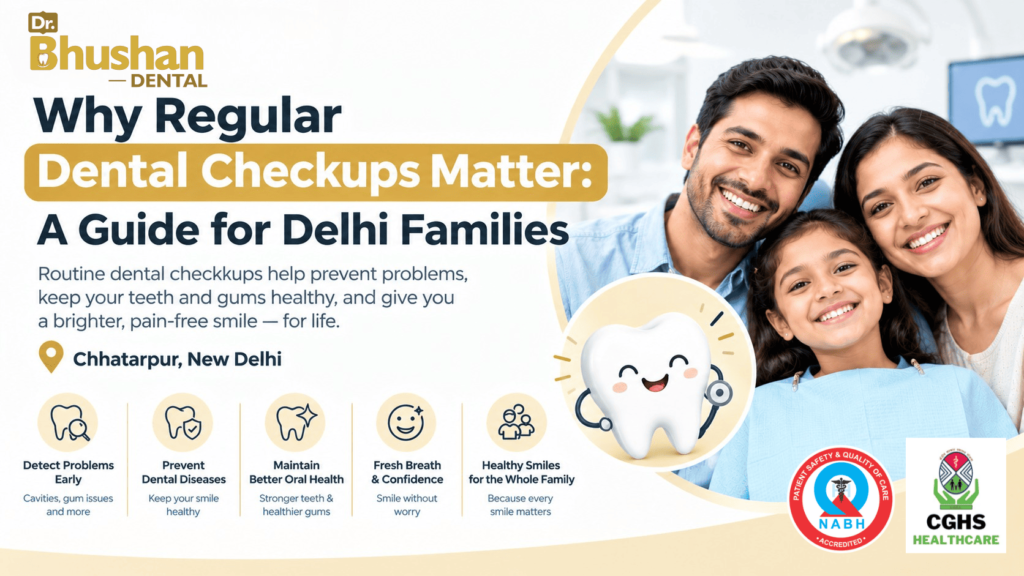
Your teeth may look healthy, and you may not experience any pain, but does that mean your oral health is in perfect condition? Not necessarily. Some dental problems, including early tooth decay and gum disease, can develop without noticeable symptoms.
Regular dental checkups help identify these concerns early, maintain healthy teeth and gums, and reduce the risk of needing more complex treatment later. For families living in Chhatarpur, Mehrauli, and other parts of South Delhi, making preventive dental care a routine habit can help protect everyone’s oral health.
If you are searching for the best dental clinic in Chhatarpur, New Delhi, understanding the importance of routine dental visits is a good place to start. At Dr. Bhushan Dental, patients can seek professional dental care focused on accurate diagnosis, preventive care, and personalised treatment.
This guide explains how often you should visit a dentist, what happens during a dental checkup, and how regular visits can help you and your family maintain healthier smiles.
A regular dental checkup is a professional examination of your teeth, gums, and overall oral health. It helps your dentist identify existing concerns, assess your risk of future dental problems, and recommend suitable preventive measures.
A dental visit may include:
The exact procedures depend on your oral health, symptoms, medical history, and individual risk factors. Not every dental checkup requires an X-ray or professional cleaning.
Many people visit a dentist only when they experience toothache, swelling, or another uncomfortable symptom. However, waiting for pain can allow some dental conditions to progress.
Here are the main benefits of making routine dental visits part of your healthcare routine.
Tooth decay can begin when bacteria in dental plaque produce acids that gradually damage tooth enamel. In its early stages, decay may not cause any noticeable discomfort.
During a dental examination, your dentist can look for signs of cavities and determine whether further assessment is necessary.
Early detection may allow less invasive treatment, depending on the extent of the damage. If decay progresses into the deeper parts of a tooth, more extensive treatment may be needed.
Why it matters: A tooth that does not hurt can still have a developing cavity. Regular examinations help identify problems before symptoms become obvious.
Healthy gums support your teeth and help protect the tissues around them. However, plaque accumulation can cause inflammation along the gumline.
Common warning signs include:
The early stage of gum disease is called gingivitis. It may often be improved with appropriate professional care and consistent oral hygiene. If gum disease progresses, it can damage the tissues and bone supporting your teeth.
If you notice bleeding gums, do not automatically assume that brushing harder will solve the problem. Arrange a dental assessment to identify the cause.
One common reason people postpone dental visits is the fear of expensive treatment.
It is understandable to worry about the cost of dental care, especially when you are unsure what treatment you might need. However, avoiding examinations does not necessarily prevent future expenses.
Routine checkups can help identify concerns while they are still manageable. Depending on the condition, early treatment may be simpler than treating advanced decay or gum disease.
For example, a small cavity may require a filling, while extensive damage to the same tooth could require root canal treatment and additional restoration.
This does not mean that every regular checkup will prevent expensive treatment. The purpose is to identify problems early, explain the available options, and help you make informed decisions.
Practical tip: Ask your dentist to explain the diagnosis, recommended treatment, alternatives, and expected costs before proceeding with non-emergency procedures.
Occasional bad breath can occur after eating certain foods or waking up in the morning. However, persistent bad breath may be associated with plaque, gum disease, tooth decay, dry mouth, or other conditions.
A dental checkup can help determine whether the cause is related to your oral health.
Your dentist may recommend professional cleaning, improved brushing and flossing techniques, tongue cleaning, or treatment for an underlying dental problem.
If the cause is not dental, further medical assessment may be appropriate.
Adults and children have different dental care needs, but both benefit from regular professional assessments.
For children, dental visits help monitor tooth development, identify early cavities, and reinforce healthy brushing habits.
For adults, routine checkups help assess gum health, existing fillings, wear on teeth, and other changes that may develop over time.
Parents can also use dental visits to understand how sugary snacks, bedtime routines, and brushing habits affect their children’s teeth.
Making dental appointments a normal part of family healthcare can help children become more comfortable with dental care as they grow.
A common question is whether everyone needs a dental checkup every six months.
The answer depends on your individual oral health and risk factors. Six-monthly visits are a common schedule, but some people may need more frequent examinations, while others may be advised to attend at different intervals.
Your dentist can recommend a suitable schedule based on your condition.
Your oral health situation | What to consider |
Generally healthy teeth and gums | Follow the examination schedule recommended by your dentist. |
Bleeding or swollen gums | Arrange an assessment rather than waiting for your next routine appointment. |
Frequent cavities or a history of tooth decay | Ask whether more frequent examinations or preventive measures are appropriate. |
Diabetes or other relevant health conditions | Discuss how your medical history may affect your oral health and visit frequency. |
Children with developing teeth | Arrange regular visits according to their age, dental development, and individual needs. |
Toothache, swelling, or a broken tooth | Seek prompt dental assessment rather than waiting for a routine checkup. |
If you have not visited a dentist for several years, you do not need to feel embarrassed. The important step is to arrange an appointment and understand your current oral health.
If you are planning a dental checkup in Chhatarpur, knowing what to expect can make the experience more comfortable.
Although the process varies depending on your needs, a routine visit generally follows these steps.
Your dentist may ask about tooth sensitivity, bleeding gums, bad breath, previous dental treatments, medications, and any medical conditions that could affect your oral health.
This is also the right time to mention dental anxiety or concerns about treatment costs.
The dentist examines your teeth for visible decay, damaged fillings, cracks, and other changes.
Your gums are also assessed for inflammation, bleeding, and signs of gum disease. The dentist may examine your tongue and other oral tissues as part of the overall assessment.
If a problem is suspected, your dentist may recommend further examination or dental X-rays.
X-rays are not automatically required at every appointment. Their use depends on your symptoms, dental history, examination findings, and clinical needs.
Plaque is a soft bacterial film that develops on teeth. If it is not removed effectively, it can harden into tartar, which cannot be removed through ordinary brushing alone.
Professional teeth cleaning helps remove these deposits when indicated.
Your dentist or dental hygienist may also demonstrate suitable brushing and flossing techniques to help you maintain your results at home.
After the examination, your dentist should explain any findings and recommend appropriate next steps.
These may include routine monitoring, improved oral hygiene, professional cleaning, a filling, gum treatment, or further investigations.
Ask questions if anything is unclear. Understanding why a treatment is recommended can help you make a confident, informed decision.
Even if you maintain a regular dental appointment schedule, certain symptoms should prompt an earlier visit.
Look out for:
These symptoms do not always indicate a serious condition, but they should not be ignored.
Seek urgent dental care for significant facial swelling, severe dental pain, or signs of a spreading infection. If swelling affects breathing or swallowing, seek emergency medical care immediately.
Remember that the absence of symptoms does not replace preventive dental examinations.
Several misunderstandings can lead people to delay routine dental care.
Pain is not always an early warning sign. Some cavities and gum problems can develop before discomfort appears.
A better approach: Follow a preventive dental schedule even when your teeth feel normal.
Brushing with fluoride toothpaste is essential, but it may not remove all plaque from between the teeth or prevent every dental problem.
A better approach: Brush twice daily, clean between your teeth every day, and attend professional examinations as recommended.
Bleeding gums may be a sign of inflammation or another underlying issue.
A better approach: Continue gentle, effective oral hygiene and arrange an examination to identify the cause rather than dismissing the bleeding.
The cost of a dental visit depends on the examination and any additional services or treatment required.
A better approach: Explain your budget concerns and request a clear treatment plan before agreeing to procedures.
Fear of discomfort, injections, or unexpected treatment can make dental visits stressful.
A better approach: Tell the dental team about your concerns before treatment begins. Ask them to explain each step and discuss ways to make the appointment more comfortable.
Choosing a dental clinic is about more than finding the nearest location. You should feel comfortable discussing your concerns, understand the proposed treatment, and have confidence in the clinical care you receive.
When comparing a dental clinic in South Delhi, consider the following factors.
Look for a clinic where dental professionals have relevant qualifications and experience for the services you need.
You should be able to understand who will examine you and who will perform any recommended treatment.
A good dental consultation should help you understand your current oral health, the reason for any recommended treatment, and the options available.
Do not hesitate to ask questions if you are unsure why a procedure is necessary.
Choose a clinic that considers prevention alongside treatment. This includes examining your oral health, explaining your risk factors, and helping you improve your daily dental care routine.
Before proceeding with treatment, ask about the expected cost, alternatives, number of visits, and any relevant follow-up requirements.
Clear communication can help reduce uncertainty and support informed decisions.
For families in Chhatarpur, Mehrauli, and nearby areas of South Delhi, a conveniently located clinic can make it easier to attend follow-up appointments and maintain a regular dental care schedule.
The right choice should reflect your dental needs, comfort, and confidence in the clinic’s approach to care.
For patients looking for preventive dental care in Chhatarpur and nearby areas of South Delhi, Dr. Bhushan Dental offers a local option for professional dental assessment and treatment.
The clinic has been serving patients since 2012, with Dr. Chandra Bhushan bringing over 15 years of clinical experience.
The clinic’s established credentials and areas of care include:
These details can help patients understand the clinic’s background and scope of care. The most appropriate treatment will always depend on an individual’s examination findings and dental needs.
If you live in Chhatarpur, Mehrauli, or another part of South Delhi, you can contact Dr. Bhushan Dental to enquire about a routine dental examination, professional teeth cleaning, or an existing dental concern.
Professional dental care works best when combined with consistent home care.
Use this checklist to help maintain your oral health between appointments.
These habits support oral health, but they do not replace professional assessment when a problem develops.
Regular dental checkups are an important part of maintaining healthy teeth and gums. They help identify developing problems, assess gum health, remove hardened plaque when necessary, and provide guidance suited to your individual needs.
You do not have to wait for a toothache to make an appointment. If you have noticed bleeding gums, persistent bad breath, tooth sensitivity, or simply have not visited a dentist recently, arranging an examination is a sensible first step.
For families searching for the best dental clinic in Chhatarpur, New Delhi, Dr. Bhushan Dental provides an established local option backed by clinical experience, preventive dental care, and a range of dental services.
Take the next step towards better oral health. Contact Dr. Bhushan Dental in Chhatarpur, New Delhi, to enquire about a routine dental checkup and discuss the right preventive care plan for you and your family.
Many people attend dental checkups every six months, but the ideal frequency depends on their oral health, dental history, and risk of developing problems. Your dentist can recommend an appropriate schedule based on your individual needs.
Yes. Early tooth decay, gum inflammation, and some other oral health problems may not cause noticeable pain. Regular examinations help identify potential concerns before they become more difficult to manage.
A dental checkup generally includes an examination of your teeth, gums, and other visible oral tissues, along with a discussion of your dental history and concerns. Professional cleaning, dental X-rays, or further tests may be recommended when clinically appropriate.
Brushing twice daily is essential, but it cannot remove hardened tartar once it has formed. A dental professional can assess whether you need scaling or another form of professional cleaning based on the amount of plaque and tartar present and the condition of your gums.
Bleeding gums can be associated with plaque buildup, gum inflammation, brushing habits, or other dental and medical factors. If the bleeding persists or occurs repeatedly, arrange a dental examination to determine the cause.
Consider the qualifications and experience of the dental professionals, the clarity of the diagnosis, the range of relevant services, treatment transparency, hygiene practices, and the clinic’s location. Choose a dental team that explains your options and answers your questions clearly.
Patients in Chhatarpur, Mehrauli, and nearby areas can contact Dr. Bhushan Dental in Chhatarpur, New Delhi, to enquire about routine dental examinations, preventive care, and professional teeth cleaning. Contact the clinic directly to confirm appointment availability and the services appropriate for your needs.